



Chemical Lace & Applique: Complete Designer Guide for Bridal, Couture & Fashion Applications in India
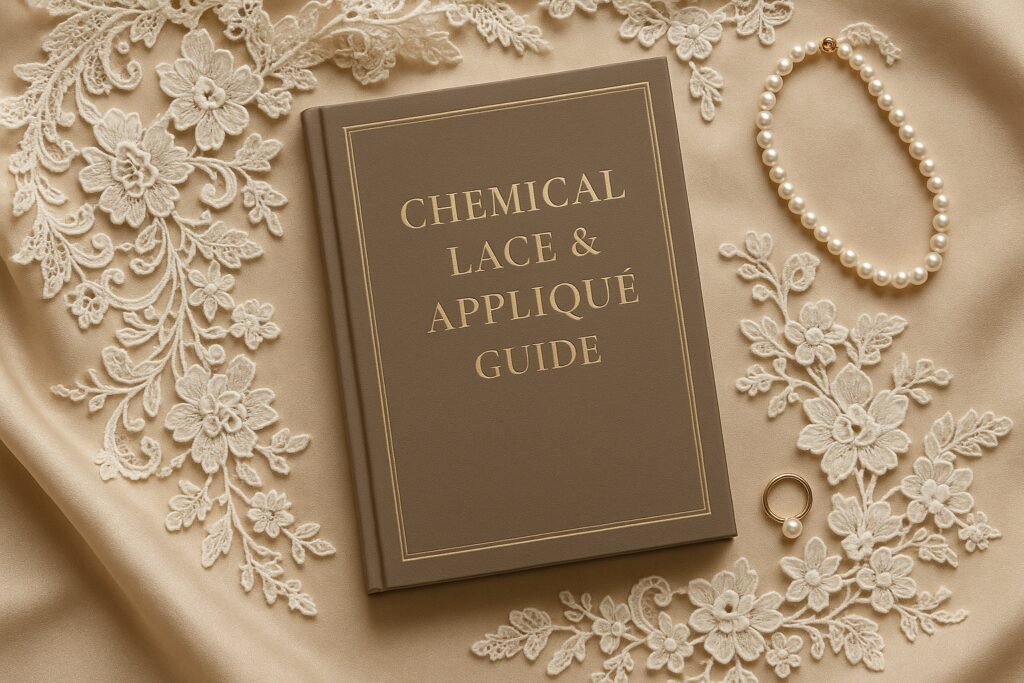
Chemical lace is a striking and elegant textile technique widely used in bridal couture, lehengas, saree borders and designer garments. Known for its structured embroidery and defined motifs, chemical lace offers both durability and refined sophistication.
In India, chemical lace is preferred by designers seeking bold patterns and architectural detail. This comprehensive guide explores its craftsmanship, applications and quality factors before sourcing for bridal and couture projects.
What Is Chemical Lace?
Chemical lace is created by embroidering intricate patterns onto a dissolvable base fabric. The base fabric is later removed through a chemical process, leaving behind a freestanding embroidered lace structure.
Unlike delicate Chantilly lace, chemical lace is more structured and bold, making it ideal for statement borders and bridal applique work.
The Process of Making Chemical Lace
The process begins with embroidery stitched onto a temporary fabric base. A chemical treatment dissolves the base material, preserving only the embroidered lace motif. The lace is then rinsed, cleaned and dried to achieve a refined finish suitable for couture garments.
The Art of Applique
Applique involves stitching lace motifs onto another base fabric to create layered designs. When combined with chemical lace, it enhances depth, richness and visual impact in bridal and designer garments.
Compared to Raschel lace or crochet lace, chemical lace offers stronger structural presence and sharper embroidery definition.
Applications of Chemical Lace & Applique
Bridal & Ethnic Fashion
Used extensively in lehengas, saree borders, dupatta edges and blouse detailing for structured elegance.
Designer & Evening Wear
Adds texture and bold embroidery impact to gowns and couture collections.
Home Furnishings
Suitable for decorative curtains, linens and ornamental textiles.
Accessories
Incorporated into handbags and trims to elevate luxury appeal.
How to Choose High-Quality Chemical Lace in India
- Inspect embroidery precision and stitch density
- Check durability of threads
- Ensure clean finishing along edges
- Confirm width suitability for garment design
- Select export-quality lace for bridal use
Explore our collection of
premium chemical lace trims →
crafted for designers and boutiques across India.
Care and Maintenance
- Gentle hand wash or delicate cycle
- Avoid twisting or wringing
- Lay flat to dry
- Store in a cool, dry place
The Future of Chemical Lace
With advancements in embroidery technology and sustainable textile production, chemical lace continues to evolve while preserving traditional craftsmanship valued in bridal and couture fashion.
Related Lace Guides
- Chantilly & Eyelash Lace Guide →
- Raschel Lace & Fabrics Guide →
- Crochet Lace Guide →
- Embroidered & Allover Lace Fabrics Guide →
Frequently Asked Questions
What is chemical lace?
Chemical lace is lace created by dissolving the base fabric after embroidery, leaving behind a freestanding lace structure.
Is chemical lace suitable for bridal wear?
Yes, chemical lace is widely used in bridal lehengas and couture gowns due to its structured motifs and embroidery definition.
What is the difference between chemical lace and Chantilly lace?
Chemical lace is structured and bold, while Chantilly lace features a lightweight net base and softer drape.
How do you maintain chemical lace fabric?
Gently hand wash or use a delicate cycle. Avoid wringing and store flat to preserve its structure.
About the Author:
This guide is written by Subhash Chand Jain & Co., a trusted supplier of premium lace fabrics and designer trims in India. Lacework.in serves designers, boutiques and garment manufacturers nationwide with export-quality lace materials.